


Tele-ICU: 14% fewer unnecessary ambulance transfers

Hospital profile
- Healthcare centre serving approximately 220,000 residents across a territory of around 12,000 km².
- A care ecosystem composed of several regional hospitals without their own ICU units.
- High critical-care activity, with a permanent need for regional support.
Challenges
- Ensuring access to critical care for rural areas located far from the reference hospital.
- Unifying heterogeneous data from multiple devices into a single interoperable platform.
- Improving collaboration between clinical teams distributed across a large and geographically dispersed territory.
Key Results
- Avoids 14% of unnecessary ambulance transfers from regional hospitals to the reference centre in one year.
- Real-time remote monitoring that supports clinical decision-making and the safety of critically ill patients.
- Creation of a territorial Tele-ICU model operating beyond the physical boundaries of the hospital ICU.
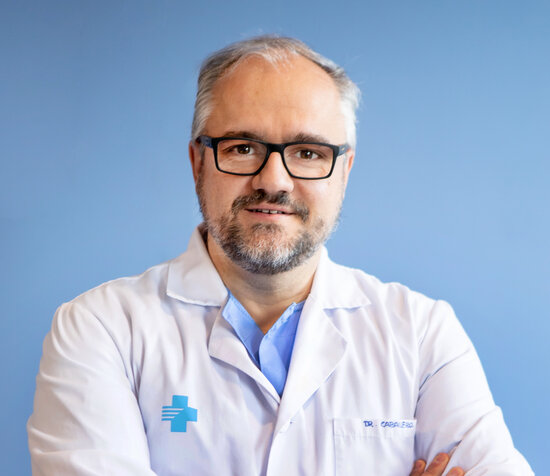
Arnau de Vilanova University Hospital (Lleida) has built a regional tele-ICU model that lets intensivists remotely monitor critically and semi-critically ill patients, in real time, at regional hospitals without an ICU. Since its launch, the model has avoided 14% of unnecessary ambulance transfers to the reference hospital in one year.
Context
Arnau de Vilanova University Hospital in Lleida manages around 28,000 discharges per year and treats more than 1,500 critically ill patients annually across the 30 beds of its Intensive Care Unit (ICU).
As the reference hospital for a large and geographically dispersed healthcare region, it coordinates critical care services for several rural hospitals in the Pyrenees area:
- Santa Maria University Hospital, also located in the city of Lleida.
- Pallars Regional Hospital (Tremp).
- Fundació Sant Hospital (La Seu d'Urgell).
- Val d'Aran Hospital (Vielha).
Although these centres provide essential healthcare and emergency services, they do not have ICU facilities, meaning that any critical or semi-critical patient must be transferred to the reference hospital by ambulance or helicopter.
Challenges of critical care in a dispersed territory
In a territory characterised by long distances, complex geography and variable transport times due to weather and terrain, the lack of immediate access to specialist intensive care services can compromise early patient management.
The goal was to ensure that every patient, regardless of where the emergency occurs, receives the same level of care and access to expert clinical knowledge as in a tertiary hospital.
This required:
- Enabling intensivists to remotely monitor patient data in real time from regional hospitals.
- Implementing a reliable, interoperable and secure system capable of connecting heterogeneous medical devices and IT systems.
- Reducing unnecessary transfers while improving coordination between local teams and specialists at the reference hospital.
- Providing continuous clinical support to healthcare professionals in the regional centres.
How the regional tele-ICU works with BC Link®
Arnau de Vilanova University Hospital implemented a regional Tele-ICU model supported by Better Care technology, enabling remote monitoring of critical and semi-critical patients across regional hospitals.
The key component of the project was BC Link®, Better Care’s interoperability platform, which automatically integrates data from any medical device regardless of brand or model.
Through this technology, monitoring data from ventilation systems, haemodynamic parameters, vital signs, infusion pumps and alarms are automatically streamed in real time to the clinical viewers BC Mview® and BC Tracker®.
This allows intensivists in Lleida to:
- Access all clinical information from monitored patients as if they were physically at the bedside in the regional hospitals.
- Maintain direct communication with local clinical teams and make shared clinical decisions based on structured and reliable data.
- Adjust treatments, prioritise resources and assess, with the support of reliable data, when a patient transfer is necessary — and when it is not.
As a result, healthcare professionals in regional hospitals feel supported by the ICU specialists at the reference centre, while intensivists in Lleida expand their clinical reach beyond the physical walls of the ICU.
Results of the regional tele-ICU model
Since its implementation, the regional Tele-ICU model has generated significant clinical and operational impact:
- Avoided 14% of unnecessary transfers to Arnau de Vilanova University Hospital in one year, sparing patients and families long journeys.
- Improved initial management of critically ill patients in regional hospitals.
- Greater equity in access to advanced critical care throughout the Lleida healthcare region.
- Enhanced clinical coordination between local teams and ICU specialists at the reference centre.
Better Care solutions BC Link®, BC Mview® and BC Tracker® have been essential in providing connectivity, interoperability and real-time remote monitoring, enabling a pioneering critical care model in Catalonia.
Conclusion
The regional Tele-ICU network in the Lleida health region demonstrates that with the right technology and data integration, intensive care expertise can reach patients wherever they are, regardless of distance.
This model not only improves the quality of care and reduces unnecessary transfers, but also strengthens the regional healthcare network and establishes a new benchmark for equity and efficiency in critical care delivery.
Want to see how this technology works inside the ICU itself? Discover how an ICU is digitised in Hospital Sant Joan de Déu – Fundació Althaia. And if you are considering a tele-ICU model for your region, request a demo!
